
How Much Do Dental Implants Cost in the UK?
The Complete 2026 Price Guide
From the implant to the crown — here is everything that goes into the price, and what to expect across every region of the UK
Dental implants are one of the most searched topics in dentistry right now — and for good reason. They are widely considered the gold standard for replacing missing teeth, looking and feeling just like the real thing. But the price tag can come as a shock if you do not know what you are paying for.
The truth is, a dental implant is not just one thing. It is a combination of multiple components, specialist skills, high-end materials, and significant lab work — all of which add up. This guide breaks down every single cost so you know exactly what you are getting and why.
What Exactly Is a Dental Implant?
A dental implant is made up of three separate components that work together to replace a missing tooth:
The Implant Fixture
This is a small titanium screw that is surgically placed into your jawbone. It acts as an artificial tooth root and over the following weeks fuses with the bone in a process called osseointegration. This is the most technically demanding part of the procedure.
The Abutment
Once the implant has integrated with the bone, an abutment is attached on top. This small connector piece acts as the link between the titanium screw below and the visible crown above. It can be made from titanium, gold, or zirconia.
The Crown
The crown is the visible part — the tooth you actually see and use every day. It is custom-made in a dental laboratory to match the shape, size, and colour of your surrounding teeth. It is usually made from porcelain or zirconia for a natural look.
When a clinic quotes you a price for a dental implant, always ask whether the abutment and crown are included — some practices advertise low prices for the fixture only, then add the other components separately later.
What Does Each Part Actually Cost?
Implant Fixture
The titanium screw placed into the jawbone. Cost varies by brand — premium Swiss-made systems like Straumann sit at the higher end.
£1,000 – £1,500
Abutment
The connector piece between the implant and crown. Custom zirconia abutments cost more than standard titanium but offer better aesthetics for front teeth.
£300 – £500
Crown
The visible replacement tooth made in a dental laboratory to your exact specifications. Porcelain-fused-to-metal sits lower. Full zirconia crowns sit higher.
£500 – £1,800
Consultation & 3D Scan
Most practices charge for the initial consultation and CT scan used to plan implant placement precisely. Do not skip this — it is essential for a safe outcome.
£75 – £400
Bone Graft (if needed)
If you have been missing a tooth for more than six months, your jawbone may have started to shrink. Around 40% of implant patients need this procedure.
£400 – £1,200
Sedation (if needed)
Some patients prefer to be sedated for the procedure. This is usually an additional cost on top of the surgery fee.
£200 – £500
For a straightforward single tooth implant in the UK, the typical all-in cost including implant, abutment, crown and consultation sits between £2,000 and £3,500 for most patients.

Every dental implant is custom planned and built to fit your exact mouth
Why Are Lab Fees So High?
The hidden cost most people do not know about
This is the part most clinics do not explain properly — and it is one of the biggest drivers of the total cost.
When your dentist takes impressions or digital scans of your mouth, that information is sent to a specialist dental laboratory. A skilled dental technician — a highly trained craftsperson — then hand-builds your crown to fit your exact bite, match your exact tooth shade, and blend seamlessly with your surrounding teeth.
This is not a factory process. It is an artisan one.
Specialist Skill
Dental technicians train for years and are registered professionals. Their time does not come cheap — and nor should it. The quality of your crown depends entirely on their skill.
High-End Materials
Premium zirconia or porcelain materials cost significantly more than basic alternatives and require specialist handling and firing in high-temperature furnaces.
Time
A high-quality custom crown can take several days to produce from start to finish. There is no shortcut that does not compromise the result.
Precision
The crown must match your bite perfectly. Too high by even a fraction of a millimetre and it causes pain and long-term joint damage. The margin for error is tiny.
In-House vs External Lab
Some clinics use in-house milling machines for same-day crowns, which can reduce lab fees slightly. But most crowns are sent to external specialist labs, adding cost and production time.
If a clinic is quoting you a price that seems unusually low, it is worth asking whether they are using a budget overseas lab. Crown quality varies enormously depending on the lab and technician. A poorly made crown can fail prematurely — costing you more in the long run.
How Much Do Dental Implants Cost Across the UK in 2026?
Location has a big impact on price. A dental implant using the same brand of fixture and the same technique can cost significantly more in central London than in Newcastle or Cardiff. This is driven by practice rent, staffing costs, and what the local market will bear — not by a difference in clinical quality.
London (Central)
£2,500 – £5,500
Harley Street and Mayfair sit at the very top. High rents and leading specialists command top prices.
London (Outer)
£2,000 – £3,500
Outer boroughs offer more competitive pricing with a high density of experienced implant dentists.
South East England
£2,000 – £3,500
Kent, Surrey and Sussex sit slightly below central London. High demand keeps prices above average.
South West England
£1,800 – £3,200
Bristol and surroundings are competitive. Rural Devon and Cornwall may have fewer specialist providers.
Midlands
£1,800 – £3,000
Birmingham, Nottingham and Leicester offer some of the most competitive implant prices in England.
North West England
£1,800 – £3,000
Manchester and Liverpool are well-served by experienced implant dentists at competitive rates.
North East England
£1,800 – £2,800
Newcastle, Sunderland, Gateshead and Durham sit at the more affordable end of the UK spectrum.
Yorkshire
£1,800 – £2,800
Leeds and Sheffield offer competitive pricing in line with the wider North of England.
Scotland
£1,800 – £3,000
Glasgow and Edinburgh have a good number of providers. Rural Scotland can push prices up.
Wales
£1,700 – £2,800
Wales offers some of the most affordable implant prices in the UK, particularly outside Cardiff.
Northern Ireland
£1,700 – £2,800
Belfast and surrounding areas offer competitive rates with a growing number of private providers.
These are approximate guide prices for a single tooth implant including implant, abutment and crown. Prices vary between individual clinics and depend on the complexity of your case. Always request a full itemised quote before committing to treatment.
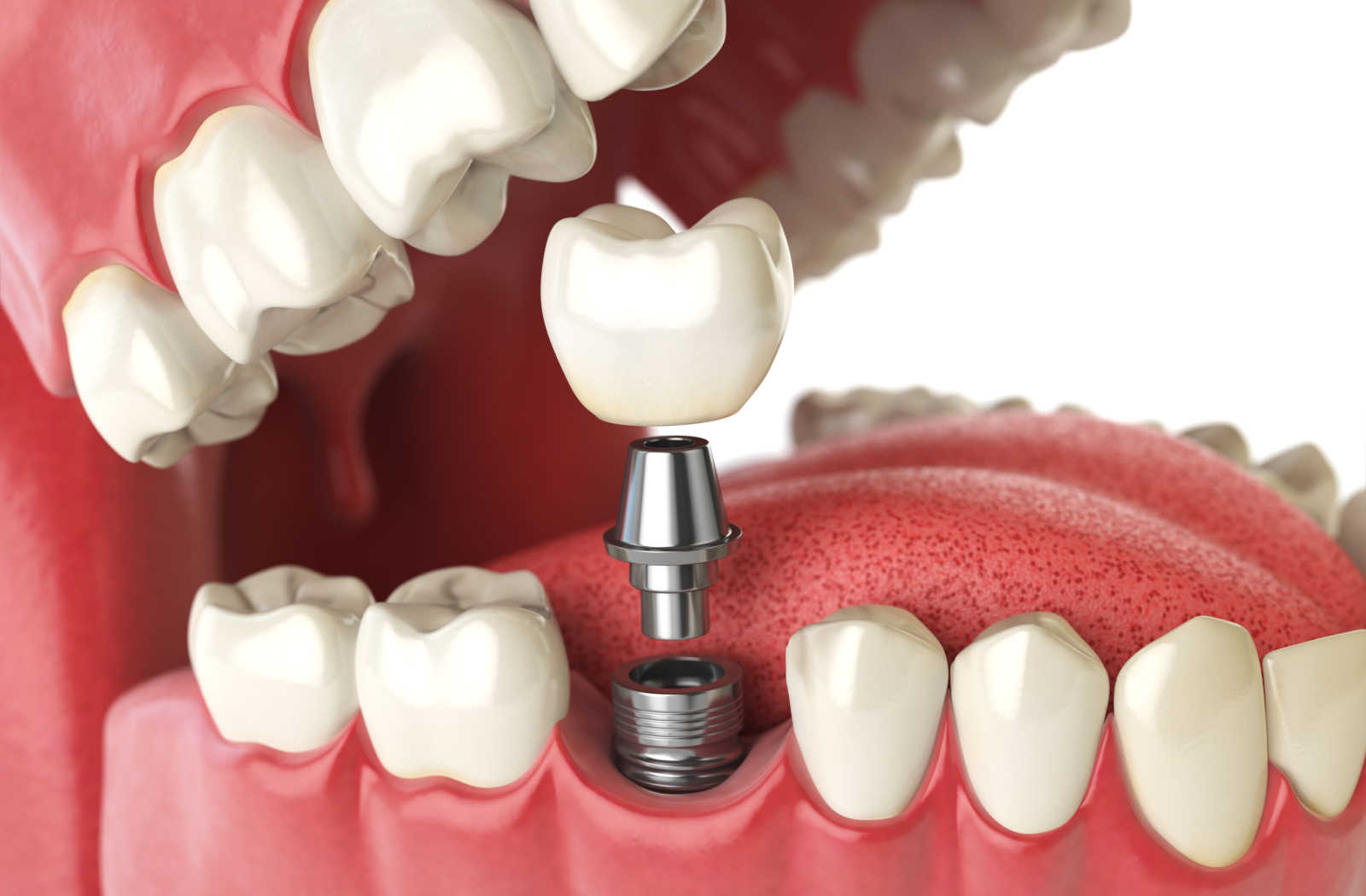
Dental implants are designed to look, feel and function exactly like natural teeth
What Does the Research Say?
📄 Long-Term Success Rates
Research consistently shows that dental implants have a success rate of between 95% and 98% when placed by a qualified specialist and properly maintained. This makes them one of the most reliable procedures in modern dentistry — and helps justify the upfront investment.
📄 The Mental Health Impact of Missing Teeth
Research from the University of Sheffield found notable links between missing teeth and mental health outcomes including effects on confidence, social interaction, and overall quality of life. Even a single missing tooth was shown to have a measurable impact — making the case for replacement treatment much broader than just oral health.
📄 A Growing Market
The UK dental implant market was valued at approximately £163 million in 2025 and is projected to grow to around £246 million by 2035. This reflects growing patient awareness, improved technology, and an ageing population increasingly seeking permanent tooth replacement solutions.
Can You Get Dental Implants on the NHS?
NHS — Extremely Limited
The NHS will only fund dental implants in very specific medical circumstances such as following mouth cancer treatment, severe facial trauma, or rare congenital cases where teeth never developed. Less than 1% of patients qualify. If you do qualify, treatment falls under Band 3 at £332.10.
Private — The Route for Most Patients
For the vast majority of people, private treatment is the only option. The upside is better materials, more advanced technology, and significantly shorter waiting times. Most practices now offer 0% finance options to help spread the cost.
If you are on a low income, it is worth asking your dentist about the NHS Low Income Scheme. While it will not fund implants, it can help with other dental costs while you save for treatment.
Are Dental Implants Worth the Cost?
Why People Choose Implants
- Look, feel and function like natural teeth
- Prevent bone loss in the jaw — protecting your facial structure long term
- Do not damage surrounding healthy teeth like bridges do
- Fixed and stable — no movement or adhesives needed
- Can last 20 years or more with proper care
- Often cheaper in the long run than repeated denture replacements
Things to Consider
- High upfront cost
- Not available on the NHS for most patients
- Requires surgery and a healing period of several weeks to months
- May need additional procedures like bone grafting
"Most patients who get dental implants say the same thing — they wish they had done it sooner. Not because it was cheap — but because having a proper, permanent tooth again is worth more than the price."
Ready to Find a Dental Implant Provider Near You?
Use DentalCompare to search and compare dental practices across the North East offering implant treatment — with patient reviews, pricing information, and contact details all in one place.
All prices are approximate guide figures for 2026 based on market research across UK private dental practices. Individual costs will vary depending on your clinical needs, chosen provider, and location. Always request a full written treatment plan and itemised quote before proceeding with any dental treatment.